Planetary Habitability
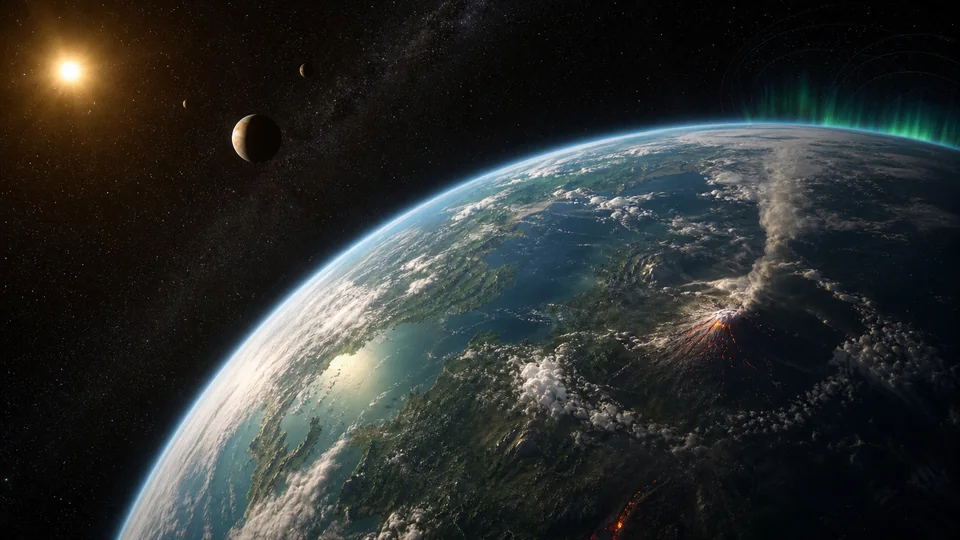
The capacity of a planetary environment to sustain conditions compatible with life over relevant places and times.
- Revision
- 1
- Created by
- SCIENDIA Knowledge Desk
- Updated by
- SCIENDIA Knowledge Desk
- Last updated
- 18.08.2026 12:20
Built by the community
Members can improve this article. Every saved change remains visible in the revision ledger.
Overview
Habitability depends on more than orbital distance. Stellar radiation, atmosphere, surface pressure, water inventory, geochemical cycling, magnetic environment and geological activity interact to determine whether stable liquid solvents and usable energy persist.
Technical foundations
The circumstellar habitable zone estimates where a rocky planet could maintain surface liquid water under specified atmospheric assumptions. Stellar luminosity and spectrum set absorbed energy, while greenhouse gases, clouds, albedo and heat transport determine climate. Carbonate-silicate feedback may stabilise temperature if weathering and volcanism remain active. Small planets can lose atmospheres through thermal and nonthermal escape, especially around active stars, whereas excessive volatiles or pressure can create runaway greenhouse or globally frozen states.
How it works
Researchers combine stellar spectra, orbital dynamics, climate models and interior evolution. Transit and emission spectroscopy constrain atmospheric composition, while mass and radius estimate bulk density. Comparative planetology tests how greenhouse feedback, escape and tidal effects reshape otherwise similar worlds.
Measurement and research methods
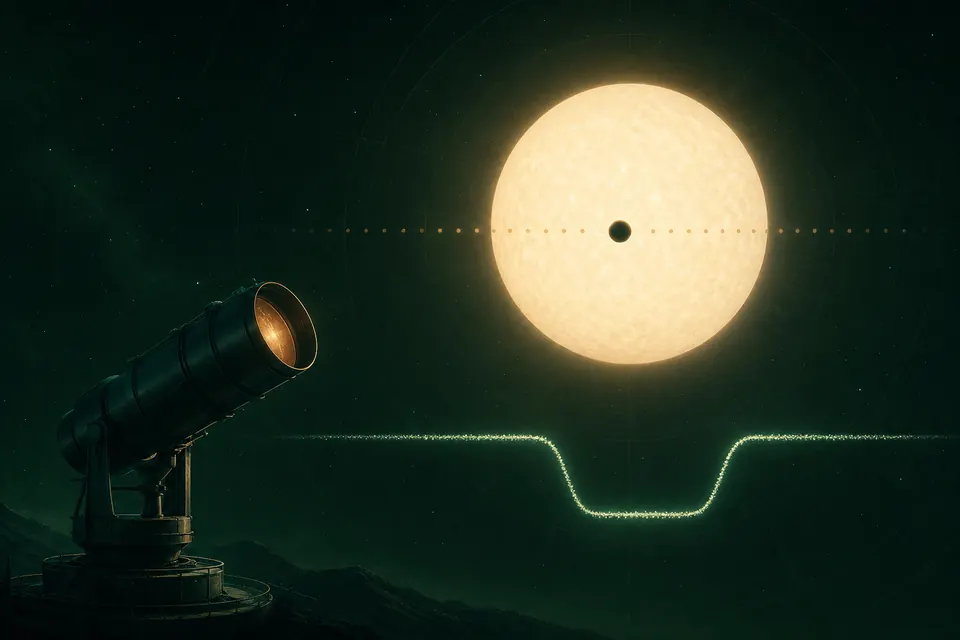
Transit measurements infer radius and atmospheric absorption, radial velocity constrains minimum mass and direct imaging may separate planetary light from the star. Interior models connect mass and radius to composition with degeneracies. Climate simulations test circulation under rotation, tidal locking and different atmospheric inventories. Biosignature assessment uses multiple gases and context: oxygen, methane or disequilibrium can have abiotic sources. Instrument systematics, stellar contamination and retrieval priors must be propagated before interpreting weak spectral features.
Key ideas
- The classical habitable zone is a screening concept, not proof of life.
- A detectable atmosphere can be shaped by both biology and abiotic chemistry.
- Habitability may be regional, intermittent or subsurface.
Current research frontier
Research broadens habitability to subsurface oceans, hydrogen-rich atmospheres and episodic climates outside the classical zone. Laboratory studies constrain photochemistry and mineral-gas reactions, while Solar-System worlds provide ground truth for remote inference. Target selection increasingly includes stellar ultraviolet history and system architecture. Open questions include the frequency of plate tectonics, origin-of-life requirements and persistence of magnetic fields. A credible life claim will require convergent evidence that excludes planetary, stellar and instrumental alternatives rather than one molecule in one spectrum.
Why it matters
Habitability research guides telescope targets and links astronomy with climate science, geology and biology. It helps frame what evidence would make a future biosignature claim credible.
Limits and open questions
Exoplanet data are sparse and models inherit assumptions from one inhabited planet. Clouds, surface properties and stellar activity create degeneracies, while false-positive biosignatures can arise without life.
Explore through connected concepts
This article is indexed with 20 technical tags. Select a tag to explore the Wiki by concept.
You may also explore
Recommended from the technical tags shared with this article.
Exoplanet Detection
Methods for identifying and characterising planets orbiting stars beyond the Solar System.
Read article →