CAR T-Cell Therapy
Cell therapy in which a patient's or donor's T cells are engineered with a synthetic receptor that recognises a selected disease antigen.
- Revision
- 1
- Created by
- SCIENDIA Knowledge Desk
- Updated by
- SCIENDIA Knowledge Desk
- Last updated
- 19.08.2026 09:05
Built by the community
Members can improve this article. Every saved change remains visible in the revision ledger.
Overview
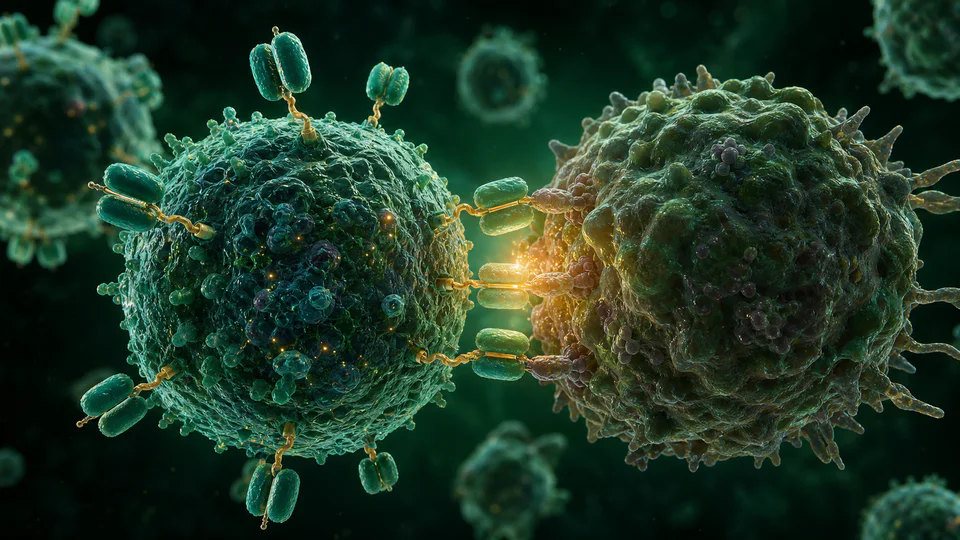
Chimeric antigen receptor T cells combine antibody-like target recognition with intracellular T-cell signalling. A CAR typically contains an extracellular binding domain, hinge, transmembrane segment and activation modules. Recognition does not require peptide presentation by major histocompatibility molecules, allowing engineered cells to attack targets that display the chosen surface antigen.
Technical foundations
CAR signalling domains commonly combine CD3-zeta activation with a costimulatory module such as CD28 or 4-1BB. Receptor density, hinge length and epitope position influence synapse formation. Viral vectors integrate the construct, whereas transposons or genome editing provide alternatives. After activation, engineered cells can differentiate into effector and memory states. Tumour killing releases inflammatory signals that activate myeloid cells and endothelium, contributing to systemic cytokine-release syndrome and immune-effector-cell-associated neurotoxicity.
How it works
T cells are collected, activated, genetically modified and expanded under controlled manufacturing conditions. Patients often receive lymphodepleting chemotherapy before infusion so transferred cells can expand. After antigen binding, CAR signalling triggers cytotoxicity, cytokine secretion and proliferation. Clinical teams monitor tumour response, cell persistence, cytokine-release syndrome, neurotoxicity, infection and prolonged depletion of normal antigen-bearing cells.
Measurement and research methods
Manufacturing records chain of identity from apheresis through modification, expansion, release and infusion. Flow cytometry measures cell phenotype and CAR expression; functional assays test antigen-dependent killing or cytokine production. Vector copy number, replication-competent virus, sterility and endotoxin are controlled. Clinical monitoring combines cell counts, cytokines, organ function and structured neurocognitive assessment. Response analysis must account for bridging therapy and lymphodepletion, and long-term registries examine persistence, secondary malignancy and delayed immune effects.
Key ideas
- Target selection must balance tumour coverage against damage to healthy cells carrying the same antigen.
- Expansion and persistence can improve efficacy while also increasing the duration of toxicity.
- A manufactured cell product varies biologically and requires identity, potency, sterility and viability controls.
Current research frontier
New designs target two antigens, include controllable switches or secrete local immune modifiers. Logic-gated receptors aim to distinguish combinations of tumour and healthy markers. Allogeneic products edit endogenous receptors to reduce graft reactions, while in-vivo delivery could avoid central manufacturing. Solid-tumour research engineers chemokine receptors, metabolism and resistance to suppressive signals. Major challenges are selecting safe target combinations, proving control circuits remain stable and making complex cell therapies accessible without reducing manufacturing or follow-up safeguards.
Why it matters
CAR T-cell therapy can produce durable remissions in some otherwise refractory blood cancers and demonstrates that living cells can be programmed as medicines. The platform motivates research on immune-cell engineering, personalised manufacturing and treatments for autoimmune disease and solid tumours.
Limits and open questions
Antigen loss, T-cell exhaustion and an immunosuppressive tumour environment cause relapse. Solid tumours add trafficking and safety barriers. Manufacturing is slow and expensive, acute toxicities require experienced centres and long-term follow-up is essential. Donor-derived and in-vivo engineering approaches may broaden access but introduce immune compatibility and control challenges.
Explore through connected concepts
This article is indexed with 20 technical tags. Select a tag to explore the Wiki by concept.
You may also explore
Recommended from the technical tags shared with this article.
Cancer Immunotherapy
Treatments that redirect, strengthen or release immune responses to recognise and control malignant cells.
Read article →