Battery Recycling
Processes that recover materials and functional components from spent batteries for safe treatment and renewed production.
- Revision
- 1
- Created by
- SCIENDIA Knowledge Desk
- Updated by
- SCIENDIA Knowledge Desk
- Last updated
- 18.08.2026 14:57
Built by the community
Members can improve this article. Every saved change remains visible in the revision ledger.
Overview
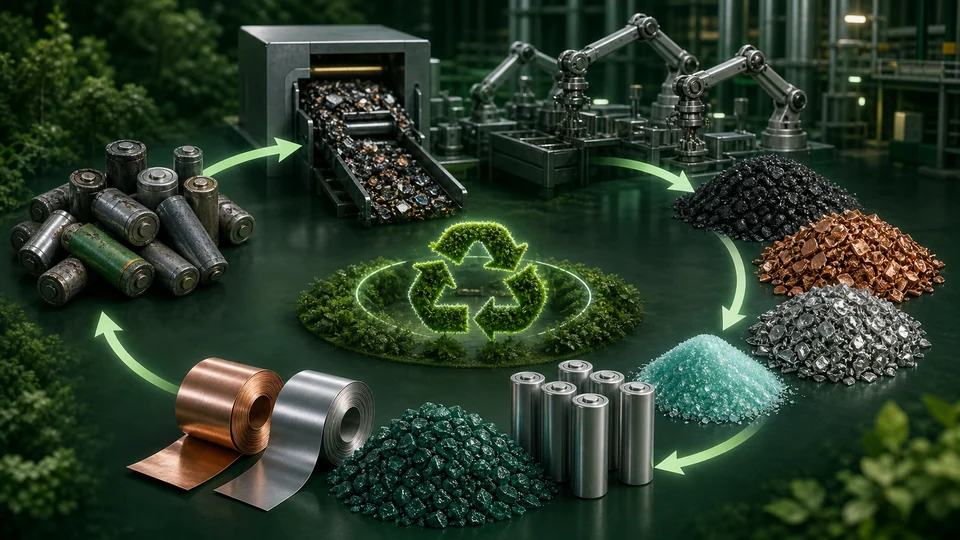
Battery recycling manages fire risk and returns metals, salts and active materials to supply chains. Lithium-ion packs contain diverse cell formats, cathode chemistries, electrolytes, binders and electronics. A recycling route must therefore identify, discharge and dismantle products before recovering materials at purity levels suitable for new batteries or other controlled uses.
Technical foundations
Lithium-ion cells combine aluminium and copper current collectors, graphite, electrolyte and cathodes such as lithium iron phosphate or nickel-manganese-cobalt oxides. Safe pretreatment controls state of charge, damaged-cell thermal runaway and volatile electrolyte. Mechanical separation produces metal foils, plastics and black mass. Hydrometallurgical flowsheets use acid or alkaline leaching followed by solvent extraction, ion exchange or precipitation. Pyrometallurgy tolerates mixed feed but may send lithium and aluminium to slag. Direct relithiation aims to repair cathode stoichiometry without destroying particle morphology.
How it works
Mechanical treatment separates housings, foils and a fine black mass. Pyrometallurgy uses high temperature to concentrate selected metals, hydrometallurgy leaches and selectively precipitates elements, and direct recycling attempts to preserve or restore cathode crystal structure. Process design includes electrolyte control, water and reagent recovery, residue treatment and analytical verification of product composition.
Measurement and research methods
Process evaluation quantifies recovery and purity for each element, energy, water, reagent consumption and hazardous residues. X-ray diffraction, electron microscopy and electrochemical cycling test whether directly recovered cathode meets functional specifications. Feed sampling matters because packs contain adhesives, cooling components and electronics beyond cells. Fire-safe logistics, automated disassembly and chain-of-custody records prevent untracked export or disposal. Lifecycle assessment defines a displaced virgin-material scenario and allocates impacts among recovered co-products; otherwise high mass recovery can appear beneficial even when energy-intensive steps dominate.
Key ideas
- Collection, transport and safe discharge are part of recycling performance, not external details.
- Mass recovery alone can hide loss of economic value or movement of environmental burden between process stages.
- Design for disassembly and chemistry labelling can improve both worker safety and product purity.
Current research frontier
Emerging work uses robotic pack identification, low-temperature delamination, electrochemical separation and selective leaching with recyclable solvents. Sodium-ion and solid-state batteries will diversify feed further. Policy instruments such as producer responsibility, recycled-content rules and battery passports can improve collection and chemistry information but require auditable data. Open problems include economical lithium-iron-phosphate recycling, preserving graphite and electrolyte value and designing packs for reversible fasteners. Circularity also requires longer product life, repair and second use when safe; recycling is the final material loop rather than a substitute for durable design.
Why it matters
Closed-loop recovery can reduce primary mining demand, stabilise strategic-material supply and lower some lifecycle impacts. Direct processes may retain more embodied manufacturing value when feedstocks are sufficiently uniform.
Limits and open questions
Mixed and damaged packs complicate automation, while changing cathode chemistry alters revenue. High recovery can require substantial energy and chemicals, and recycled output must meet strict impurity limits. Lifecycle claims depend on collection rate, electricity source and displacement of actual virgin production.
Explore through connected concepts
This article is indexed with 20 technical tags. Select a tag to explore the Wiki by concept.
You may also explore
Recommended from the technical tags shared with this article.
Battery Electrochemistry
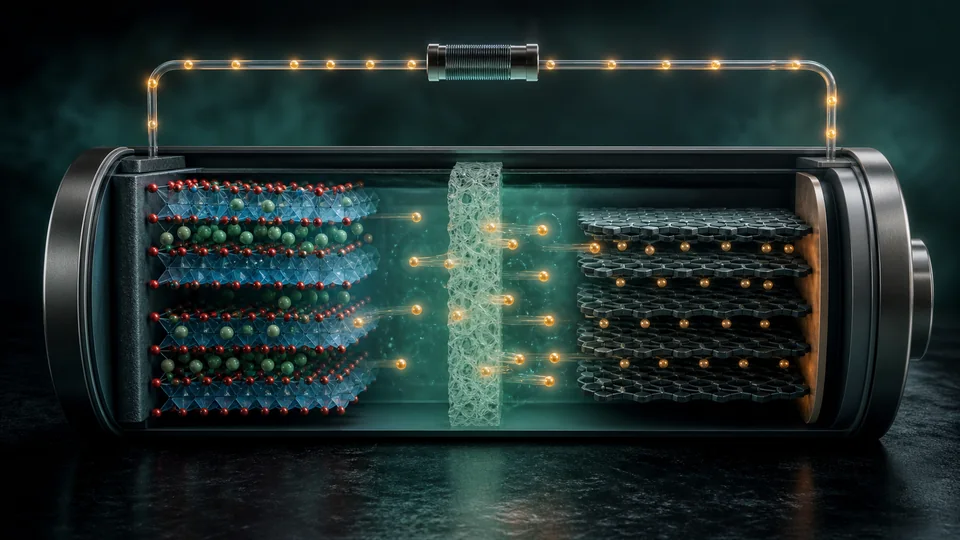
The coupled ion transport, electron transfer and materials transformations that store and release electrical energy in batteries.
Read article →