Cancer Immunotherapy
Treatments that redirect, strengthen or release immune responses to recognise and control malignant cells.
- Revision
- 1
- Created by
- SCIENDIA Knowledge Desk
- Updated by
- SCIENDIA Knowledge Desk
- Last updated
- 18.08.2026 11:45
Built by the community
Members can improve this article. Every saved change remains visible in the revision ledger.
Overview
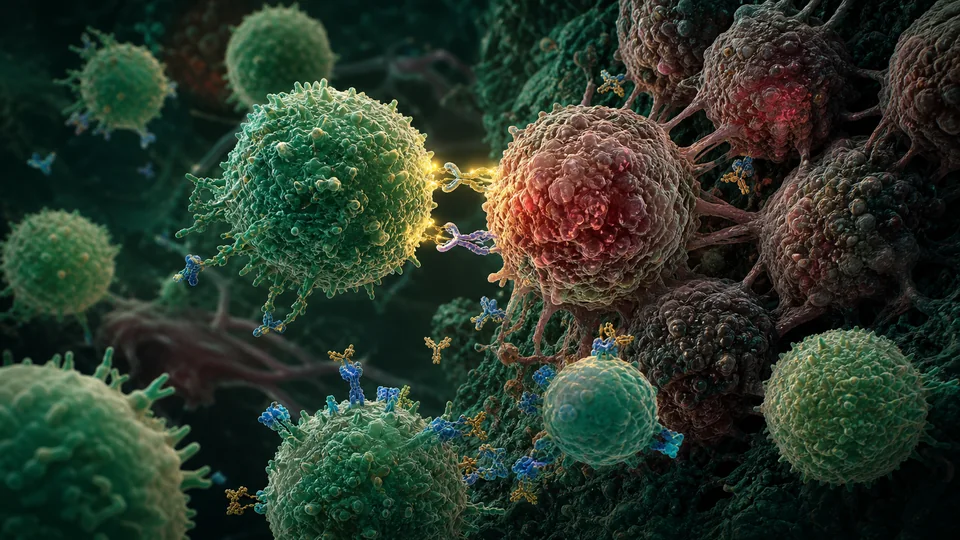
Cancer immunotherapy exploits differences between tumours and healthy tissue while overcoming mechanisms that suppress immune attack. Checkpoint inhibitors, engineered T cells, therapeutic antibodies, cytokines and vaccines act at different stages of antigen recognition, activation, trafficking and tumour-cell killing.
Technical foundations
Tumour immunity begins when antigen-presenting cells process tumour-derived proteins and activate T cells that recognise peptide-major-histocompatibility complexes. Activated cytotoxic cells traffic into tissue, form immune synapses and release perforin and granzymes. Tumours evade this cycle through antigen loss, impaired presentation, inhibitory checkpoint ligands, suppressive myeloid cells, regulatory T cells and metabolically hostile microenvironments. Checkpoint antibodies block receptor-ligand interactions such as PD-1 with PD-L1 or CTLA-4 with costimulatory pathways, shifting activation thresholds rather than targeting a tumour-exclusive molecule.
How it works
Tumour antigens are presented to T cells, which require receptor recognition plus contextual activation signals. Checkpoint blockade removes selected inhibitory signals; engineered receptors provide predefined recognition; antibodies can block growth pathways or recruit effector mechanisms. Response still depends on immune-cell access, antigen persistence and the tumour microenvironment.
Measurement and research methods
Clinical trials use survival, response duration and quality-of-life endpoints because imaging can show atypical inflammatory patterns. Biomarkers include ligand expression, mismatch-repair deficiency, mutation burden and immune infiltration, but assays and thresholds vary. Flow cytometry, spatial imaging and single-cell sequencing characterise immune states, while circulating tumour DNA can track molecular response. Cell therapies require release testing for identity, potency, sterility and replication-competent vectors. Adverse-event monitoring distinguishes cytokine-release syndromes, neurotoxicity and organ-specific autoimmunity, with predefined escalation and immunosuppression protocols.
Key ideas
- A tumour response can be durable because adaptive immunity forms memory.
- Removing inhibition can also damage normal tissue through immune-related adverse events.
- Biomarkers are probabilistic and rarely identify every responder or resistant tumour.
Current research frontier
Research combines checkpoint blockade with vaccines, radiation, targeted drugs and agents that remodel myeloid or stromal compartments. Engineered T-cell receptors and chimeric antigen receptors are expanding beyond blood cancers through dual targets, logic gates and local delivery. Personalised neoantigen vaccines use tumour sequencing but face manufacturing time and clonal evolution. Open problems include identifying primary and acquired resistance, preserving activity without severe autoimmunity and making complex therapies scalable. Comparative trials and long follow-up are needed because early response rates do not capture durability, late toxicity or equitable real-world access.
Why it matters
Immunotherapy has produced long-term control in some advanced cancers previously considered untreatable and has expanded the conceptual toolkit of oncology beyond directly toxic drugs.
Limits and open questions
Many patients do not respond, solid tumours can exclude immune cells and tumours evolve antigen loss or suppressive niches. Manufacturing personalised cells is complex, toxicity can be rapid, and cost and specialist infrastructure limit equitable access.
Explore through connected concepts
This article is indexed with 20 technical tags. Select a tag to explore the Wiki by concept.
You may also explore
Recommended from the technical tags shared with this article.
CAR T-Cell Therapy
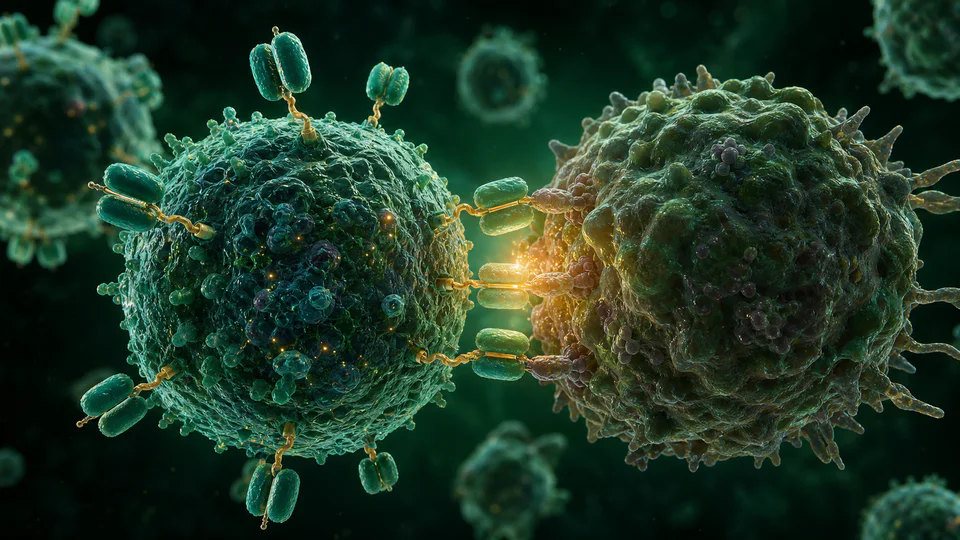
Cell therapy in which a patient's or donor's T cells are engineered with a synthetic receptor that recognises a selected disease antigen.
Read article →